The honest answer is that there is no schedule, and the agency most people expect to hand them one does not hand them one.
The EPA’s position is that air ducts should be cleaned as needed rather than routinely, and it says plainly that duct cleaning has never been shown to prevent health problems on its own. That is an odd thing for a duct cleaner to put near the top of his own page. I would rather you read it from me than find it somewhere else later and wonder what else I left out.
None of which means the work is pointless. It means the reason matters. Here is how I decide, and how you can decide before you call anybody.
When it is genuinely worth doing
The EPA names three conditions, and after a few hundred houses I would not add much to the list:
- Visible mold. Growth inside the ductwork itself, or on the coil, the drain pan or the blower. Not a musty smell on its own. Actual growth, and most of what people take for it is dust.
- Vermin. Rodents, insects, or a nest. If something has been living in there, everything it left behind is now in your airstream.
- Debris heavy enough to be moving. Not dust sitting quietly on the floor of a duct, which is normal and mostly harmless. Dust thick enough that it is being pushed back out of the registers into the room.
Three more I would add, because they come up constantly out here:
- After construction or a remodel. Drywall dust is fine enough to hang in the air for days and it gets everywhere. If the system ran during the work, it pulled that in and stored it.
- After you buy a house. Not because the ducts are automatically bad, but because you have no idea what the last twenty years put in them. Looking is cheap and it settles the question, and there is a guide to exactly that.
- When someone in the house is struggling to breathe and you have already ruled out the obvious sources. Ducts are rarely the first cause. They are sometimes the last one left.
What is not a reason
A calendar. If nothing on that list is true and nothing has changed about your house, three years passing is not itself a reason to open the system up.
I would rather be the person you call in three years than the one who charged you this year for work that changed nothing.
Your dryer vent is a different question entirely
Everything above is about the ducts that heat and cool your house. Your dryer vent is not one of those, and it is the one place I will give you an actual interval.
Lint is fuel. It collects in the duct, the duct gets warm, and the airflow that would carry heat away is the thing that has been blocked. The National Fire Protection Association’s data is consistent on this: failure to clean is the leading contributing factor in home clothes dryer fires. That is not a scare tactic, it is the single most common cause.
For a normal household, roughly once a year. Sooner if the run is long, if it has a lot of bends, if it exits through the roof, or if you are drying for a big family. This is the job most homes on the island have never had done, and it is the one I would want done at my own house first.
You do not need me to tell you when it is due. Your dryer will:
- Clothes that need two cycles when they used to need one
- The dryer itself hot to the touch, or the room getting warm
- A faint burning smell when it runs
- Lint collecting around the door seal
- The flap on the outside of the house not opening properly, or at all
Any one of those means the vent is restricted. Two of them means stop reading and go look behind the dryer. There is a longer guide to reading those signs if you want to be sure before you call anybody.
How to check the ducts yourself
You do not need to call anyone to find out.
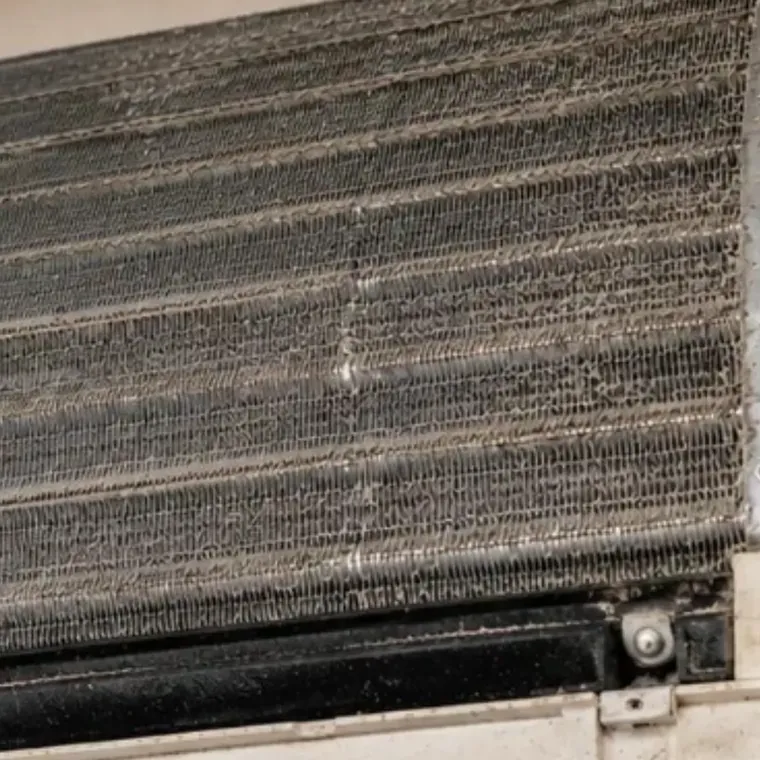
Take the cover off one register, ideally a return, and shine a flashlight in. A layer of settled grey dust is normal and every house has it. What you are looking for is different: fuzz thick enough that you cannot see the metal underneath, anything growing, or anything that used to be alive.
Take a photograph while you are down there. If you want a second opinion, text it to me and I will tell you what I think, including when I think it is fine.
What I will actually tell you
If I come out and look and the system does not need doing, I will say so and I will show you why. That is not a slogan, it is just cheaper for both of us than the alternative.
And if it does need doing, you will see the same thing I see, before and after. Every photograph on this site is one of my own jobs.